

Heat Harvest
by Convertus
Why waste valuable thermal energy if you can capture it instead? The natural metabolic processes in composting organic waste produce large amounts of heat, a previously untapped source of bio-energy.
Developed in partnership with WTT and GTL Europe, our Heat Harvest technology puts that surplus heat to good use on-site at our organic waste facilities in Canada, including:
- Heating on-site facility buildings
- Pre-heating process air (see our Biodrying page for more details)
- Drying other products
The heat can also become a source of renewable energy for local nearby businesses including heating:
- Commercial greenhouses
- Mushroom farms
- Factories and business premises
- Businesses with high demands for hot water

Convertus is the largest and most advanced organic waste processor in Canada.
By capturing and utilizing this bio-energy byproduct, we offset our own use of fossil fuels and electricity, while reducing our operating expenses and carbon footprint emissions too.

“Re-use of heat saves our facility yearly about 900.000 cubic meters of natural gas. In addition, we have enough production to sell heat to neighbouring operations. At full capacity we could save about 2 million cubic meters of natural gas.“
Pieter van den Boomen
Co-Founder Upcycling, Netherlands
Taking the Heat Out of In-Vessel Composting
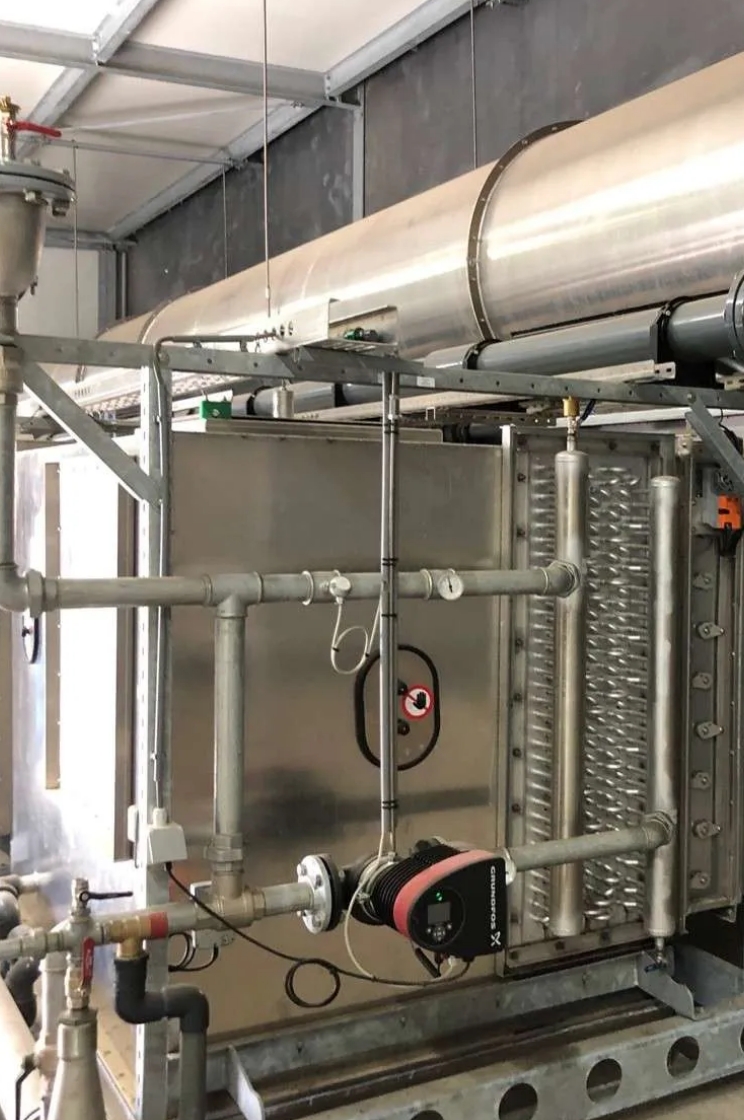
Heat capture from composting is not a new idea, but our Heat Harvest technology makes it both straightforward and efficient. Our system adds specialized heat exchangers and a smart energy management system to existing technology that may be in place. This ensures we can capture all of the residual process heat, and make it available for other processes.
Heat Harvest can be ‘fed’ by a range of organic feedstocks including:
- Source-Separated Organics (SSO) including residential food waste
- Paper fibres and wood waste
- Organic waste including leaf and yard waste
- Spent mushroom compost
- Municipal Solid Waste (MSW)
- Manure
Our Heat Harvest technology can be installed in new composting facilities, or it can be retrofitted in existing installations. Contact us to discuss your requirements.
Benefits of Heat Harvest

Improved Effective
Organic Matter

Higher
Crop Yield

Sell Energy to
Neighboring Process

Reduce Water
Content

Reduce Transport
Cost and Emissions

Free Source of
Thermal Energy
The Heat Harvest Process
Our in-vessel composting systems aerate the feedstock and keep each process at its optimal conditions. By managing the composting process in different phases, we can shorten the “time-to-temperature” required AND capture the available thermal energy too.
Higher heat temperatures can be captured by running at thermophilic temperatures, resulting in up to 2600MJ captured and reused per ton of feedstock.

UP TO
per ton of feedstock
can be captured


Growing with Heat Harvesting
Our heat harvesting can help growers increase their harvests through the production of exceptional quality composts and fertilizers. The Heat Harvest system helps us produce better products by:
- Reducing water content
- Increasing calorific value
- RImproving organic stability
- Retaining higher nutritional value
Heat Harvest can be part of processing a range of organic waste and feedstocks into:
- Quality compost
- Peat alternative
- Organic fertilizer
- Biofuel with high heating value
- Refuse Derived Fuel (RDF)
- Input for pelletizer
Heat Harvest for Drying and
Composting Feedstocks
- Biogas digestate
- Sewage sludge / biosolids
- Poultry manure
- Separated cow/pig manure
- Biomass
- Organic waste
- Green waste
- Municipal solid waste (MSW)
- Co-products from feed/food processing

View Past Client Projects
 HEAT HARVEST
Heat is supplied to neighbouring mushroom nursery and neighbouring asparagus farm.
The plant has the capacity to substitute close to 2 million m3 natural gas.
The input to this facility is 25.000t/y spent mushroom compost, with a moisture content of 70%. The electricity consumption is ca. 5kWh/ton. The output of this process is 13.000 t/y compost with a moisture content of <60%. The free thermal power that is >1.5 MW!
Heat is supplied to neighbouring mushroom nursery and neighbouring asparagus farm.
The plant has the capacity to substitute close to 2 million m3 natural gas.
The input to this facility is 25.000t/y spent mushroom compost, with a moisture content of 70%. The electricity consumption is ca. 5kWh/ton. The output of this process is 13.000 t/y compost with a moisture content of <60%. The free thermal power that is >1.5 MW!